Own the Corner Before the Country: A Local-Fame Playbook for UK Brands
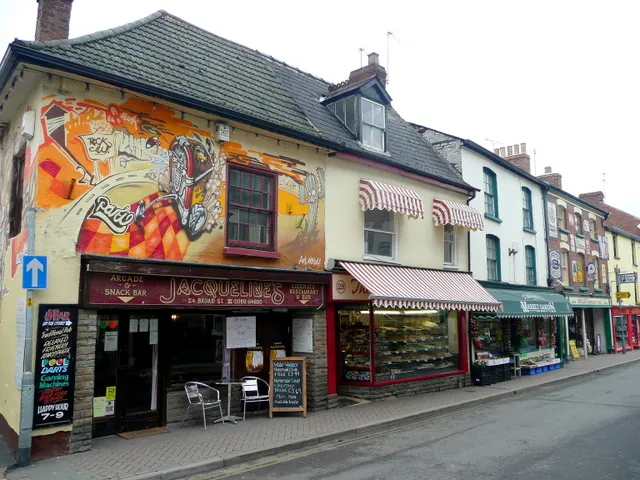
Photo: Jonathan Billinger, CC BY-SA 2.0, via Wikimedia Commons
There's a particular kind of UK brand meeting where someone points at a map of Britain and says 'we're going national'. It sounds ambitious. Often it means spreading a thin budget across a country and hoping the algorithm does the heavy lifting. Meanwhile, the shop on the corner has no idea who you are.
National reach is not the same as local relevance. You can buy impressions in every postcode and still be nobody's first thought. The opposite is more useful: be unmistakable in one place before you scale. One street. One town. One postcode. One-mile fame.
This isn't small thinking. It's a campaign strategy with a tighter brief, a clearer audience and a much better chance of being remembered.
What one-mile fame looks like
It's not a billboard with your logo on it. It's the moment someone says 'oh, the place that does the thing' and everyone in the room knows which place they mean.
In practice, it looks like a bakery whose queue is a local landmark. A repair shop that the neighbourhood Facebook group recommends before anyone checks Google. A software brand that sponsors the under-12s football team and gets a mention in the parish newsletter. A coffee roaster whose bags turn up in every independent café within three streets. You don't need national fame to have local gravity.
The test is simple: can a stranger in that area describe what you do, who you're for and why you're different, without looking at your website? If not, you haven't arrived yet.
Buy attention like a local, not a tourist
Local attention is cheaper than national attention, but it's not free. It costs time, manners and a willingness to be useful.
Start with the places people already trust. Hyperlocal newsletters, the independent paper that still lands on doorsteps, the library noticeboard, the school raffle, the market, the bus stop, the local radio station. None of these are glamorous. All of them are specific.
Then add partnerships. Not a generic 'supporting local business' badge. A real collaboration with a shop, café, venue or community group that your audience already uses. A joint product. A swap of space. A workshop. A one-off event that makes sense on a Tuesday night, not just in a press release.
Use local creators carefully. The person with 2,000 followers in one town can be more valuable than the influencer with 200,000 scattered across the UK. Brief them like a neighbour, not a billboard: what's the thing they'd actually tell a friend about?
And put something physical in the world. A window, a poster, a sample, a flyer that doesn't look like a flyer. Local fame needs local evidence. Digital alone is too easy to scroll past.
Measure the default choice, not the reach
Most campaign reports celebrate reach because reach is easy. For local fame, reach is the wrong scoreboard. You want to know whether you've become the default.
Ask five questions, in this order:
- Unprompted recall. In your target postcode, can people name your brand when asked about your category? Not 'have you seen us?' — 'who do you think of when you need X?'
- Share of local search. Are you showing up for the searches that include the place name, not just the category? 'Coffee [town]' matters more than 'coffee'.
- Referral language. Are locals recommending you without being paid? Listen in the local Facebook group, the WhatsApp chats you're allowed into, the queue.
- Repeat and radius. Are customers coming back, and are they coming from within a walk or a short drive? A tiny radius with high repeat is a better signal than a huge radius with no return.
- The scenario test. Give people a realistic scenario: 'You need a birthday cake on Saturday morning. Where do you go?' If your name isn't in the first two answers, you're not the default yet.
Track these before and after a local push. A small sample is fine. Twenty honest conversations in one postcode will tell you more than a national survey with a thousand maybes.
Scale only when the corner is yours
The temptation is to take one good local result and immediately buy a national campaign. Resist it. First, check whether the result travels. Can you repeat the same play in a second postcode without losing what made it work? Do you have the operational capacity to serve the demand? Is the local fame real, or did you just pay for a busy fortnight?
A good rule: don't scale until you're the default in one place, and can explain exactly why. Then take the same recipe to the next postcode. Not a watered-down national version. The same specific, local, useful version, repeated.
National reach might come later. It's a nice by-product. It's a terrible starting point.
Blue Lemons isn't against ambition. We're against vagueness. A brand that owns one corner properly is more interesting than a brand that's vaguely famous everywhere. Start with the corner.