The Sign Isn't the Shop: Why High Streets Need a Blue Lemon, Not Another Logo
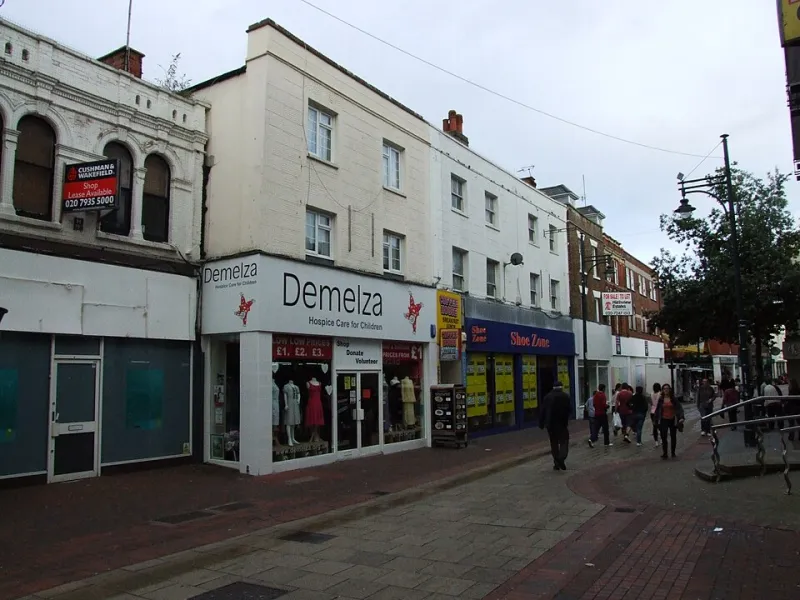
Photo: Chris Whippet , CC BY-SA 2.0, via Wikimedia Commons
In 2026, the conversation about UK high streets is still mostly a conversation about what is missing. Empty units. Fewer banks. More delivery vans. And, inevitably, a fresh round of logos.
You can see why. A logo refresh is visible, manageable and easy to announce. It feels like action. But walk into most refreshed independents and the experience is the same as before: the same layout, the same products, the same polite social media, the same slightly apologetic sign in the window. The logo changed. The reason to come back did not.
The logo refresh trap
There is an entire cottage industry around making small businesses look more professional. Some of it is genuinely useful. A bad sign can put people off. A confusing website can lose a sale. But professional is the floor, not the ceiling. Once you look tidy, the next question is why anyone should choose you over the tidy business two doors down.
A new logo cannot answer that question. Neither can a new colour palette, a new typeface or a new Instagram grid. These are clothes. They do not give a shop a personality.
What customers remember is behaviour. The café that knows what you order. The bookshop that ordered something odd because you asked. The repair shop that told you honestly not to bother fixing the thing. These moments are not marketing campaigns in the traditional sense, but they are absolutely brand work. They are the things people repeat to friends.
What a blue lemon actually is
A blue lemon is a useful oddity. It is expected in category — a lemon is still a lemon — but unexpected in execution. Blue.
For a high street business, that means one repeatable behaviour that sits at the centre of the identity. Not a one-off event. Not a discount. Not a mascot. A habit that staff can carry out without a manager, that customers can describe in a sentence and that expresses something true about the business.
It should pass four tests. Is it useful? Is it repeatable? Would someone tell a friend about it? And does it say something about what you believe? If the answer to all four is yes, you have something better than a rebrand. You have a reason to walk in.
Three composite examples
These are composites rather than case studies, but they are the kind of thing that works.
The café with a regulars' shelf. Not a wall of Polaroids, which every café has. A small shelf of books and records chosen by regulars, with handwritten labels explaining why. The café does not sell them; it just hosts them. The behaviour is repeatable, cheap and deeply local. It turns customers into curators, and curators bring friends.
The bookshop with a first-page ritual. Every Saturday morning, a staff member reads the first page of a book aloud and films it for the shop's social channels. No editing tricks. No dancing. Just a person, a book and thirty seconds of attention. Over time, it becomes the shop's signature: the place that introduces you to your next read rather than just stocking it.
The repair shop with a confession box. Customers write down how they broke the item. The shop fixes what it can and displays the best confession notes in the window, anonymised. It sounds small. It is small. But it turns a transaction into a story, gives people a reason to look in the window and makes the shop's honest, fix-first philosophy visible without a single slogan.
The pattern is the same each time. The business is not inventing a gimmick. It is taking something it already believes and turning it into a visible, repeatable act.
Campaign thinking for a high street budget
None of this requires an advertising budget. It requires consistency. A blue lemon is a campaign that never ends, which is exactly what a local brand needs. You are not buying attention once. You are earning it weekly.
That means thinking like a tiny broadcaster rather than a shop with a Facebook page. What happens every Tuesday? What can people expect when they walk in? What is the thing they will photograph without being asked? The answers are your campaign plan.
The high street does not need another logo. It needs more reasons to be remembered. A sign can tell people who you are. A habit gives them a reason to come back.
The sign can wait
If you run an independent business and you are staring at a quote for a new identity, ask a harder question first: what do we do that nobody else on this street does?
If you cannot answer in one sentence, the logo is not the problem. Find the behaviour. Make it useful. Repeat it until it becomes yours. Then, by all means, redesign the sign.
Just do not expect anyone to remember it.